



Cupcakes can be one of the easiest gifts to send and one of the easiest to get wrong if you do not decide a few basics upfront. Unlike a card or flowers, cupcakes involve serving sizes, storage, delivery timing, dietary needs, and design details that can quickly become complicated. A thoughtful checklist helps you avoid last minute stress and ensures the cupcakes arrive looking and tasting as intended.
Before you place an order, start by clarifying what the cupcakes need to do. Are they a surprise that has to travel well, a centrepiece for a party table, or an individually boxed thank you for clients? Next, consider who will eat them and how. Cupcakes for a classroom, an office, or a mixed family gathering often need clear allergen information and options for common “free from” requirements. Then there is the visual side: colours, themes, toppers, and messaging. Personalisation is usually the difference between cupcakes that feel generic and cupcakes that feel made for the moment, but it is also where lead times and permissions can come into play.
This checklist walks through the key decisions to make before ordering cupcake gifts for delivery, so you can choose appropriate quantities, flavours, designs, and delivery details with confidence.
Define the occasion, recipient and serving requirements
Begin with the reason for gifting, because it determines almost every other choice. A birthday gift sent to one person needs different quantities and packaging than cupcakes for a wedding morning, a baby shower, or a corporate event. Write down the occasion, the date, and whether the cupcakes will be eaten immediately or later. If the recipient is likely to share, plan as if more people will try them than you expect. Cupcakes have a way of becoming “just one each,” and that can outpace your headcount.
Next, decide how many people you are actually serving. For a party, you can often plan one cupcake per person, plus a few spares. If cupcakes are the only dessert, consider offering more variety and a little extra quantity. For a gift box sent to a household, think about how many people live there and whether they are likely to host visitors. If the recipient is one person, a smaller box can feel more intentional than an oversized delivery that becomes a storage problem.
Serving conditions matter. Ask where the cupcakes will be stored upon arrival. Will they sit in a warm meeting room, a cool kitchen, or be transported to another venue? If they need to travel after delivery, choose sturdy decoration styles and packaging that protect the icing. If they will be served at a set time, align the delivery so the cupcakes are as fresh as possible without creating a “someone must be home all day” issue.
Finally, consider the recipient’s preferences and practicalities. Some people love novelty designs, others prefer classic flavours and subtle decoration. If the recipient is a colleague, keep messaging and imagery appropriate for a workplace setting. If the cupcakes are for children, check for school rules around allergens, ingredients, and individually wrapped items. Defining these basics early keeps the rest of your decisions straightforward.
Choose flavours, dietary “free from” needs and allergen controls
Flavour selection is where you can make the gift feel personal without needing complex decoration. Start with the recipient’s favourites if you know them. If you do not, choose a balanced mix that covers popular preferences, such as a chocolate option, a vanilla based option, and a fruit or caramel option. Variety works well for groups, while a single flavour can feel more cohesive for a themed event.
Then handle dietary requirements and “free from” needs early, not as an afterthought. Ask directly if you can. If it is a surprise gift, check with someone close to the recipient or look for clues from past hosting, workplace notes, or previous orders. Common requirements include gluten free, dairy free, egg free, and vegan, but you may also encounter requests such as nut free or no alcohol flavourings. Be careful with phrasing. “Free from” can mean different things to different people, and some needs are preferences while others are medical.
Allergen controls deserve special attention, particularly for gifts to shared spaces like offices, schools, and events. If you are ordering both standard and “free from” cupcakes, ask how they are produced, stored, and packaged to reduce cross contamination risk. In many kitchens, absolute separation is difficult, so it is important to understand the level of control rather than assume. Request clear labelling for each cupcake or box so recipients can confidently choose what is safe for them. Labelling is also helpful for flavour identification, especially when designs are similar.
Texture and shelf life also matter. Some flavours travel better than others, and some fillings can be more delicate. The cupcakes may be in transit for a period, choose styles that hold their shape and do not require immediate refrigeration unless you know the recipient can store them correctly on arrival.
If you are providing cupcakes to a group, consider including a simple ingredient and allergen note with the delivery, and avoid “mystery flavours.” A beautiful cupcake is not helpful if someone cannot safely eat it or cannot tell what it contains.
Plan personalisation, design details and any intellectual property permissions
Personalisation is usually the main reason people choose cupcake gifting. Start with the message you want to convey, then work backwards into design. Keep wording short and readable. Cupcake toppers and fondant plaques have limited space, and long messages can become cramped or hard to read. For a gift, a name and a short phrase is often enough. For corporate gifting, you might choose a company name, a brief thank you, or a campaign message.
Next, decide how specific the design needs to be. Some occasions call for literal themes, while others benefit from a refined colour palette and a consistent style. If you have inspiration images, share them early, but be clear about what you like in them. Is it the colours, the piping style, the level of detail, or the shapes? This helps translate inspiration into something achievable on cupcakes, which have far less surface area than cakes.
Colour matching is another detail people forget. If you want cupcakes to coordinate with a party theme, provide the key colours and note whether they should be bright, pastel, or muted. If the cupcakes need to match a brand palette, supply the closest colour references you have. Printed toppers and icing colours can vary slightly between screens and real life, so allow some flexibility.
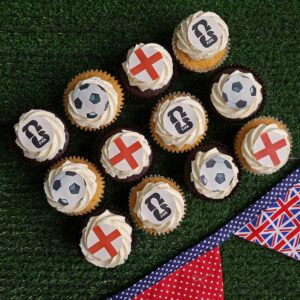
Now address intellectual property. Requests for logos, branded characters, sports crests, or images from films and games can involve permissions. Even if it feels like a personal, one off gift, a bakery may need confirmation that you have the right to use certain artwork. For corporate orders, provide your logo in a high quality format and confirm you own it or have permission to use it. For personal events, consider alternatives that capture the theme without using protected imagery, such as colour schemes, generic icons, or custom wording.
Finally, think about practicality. Highly detailed toppers may be more fragile in transit. Three dimensional decorations can shift if the box is moved. If delivery timing is tight, simpler designs may be more reliable. Personalisation should enhance the gift, not create stress. A clear brief that balances ambition with transport and timing constraints is the best path to cupcakes that arrive as expected.
Confirm delivery logistics, lead times, packaging and cancellation terms
Delivery is often the make or break detail for cupcake gifts, especially when sending across the UK. Start by choosing the delivery date with a buffer. If cupcakes must arrive for a specific event, aim for delivery the day before when possible, as long as storage is realistic for the recipient. This reduces the risk of a delayed courier affecting a time sensitive moment.
Confirm lead times before you finalise your design. Complex personalisation, larger quantities, and “free from” options may require additional preparation time. If you are ordering for a busy season, place the order earlier than you think you need to. Last minute changes can also extend timelines, so treat your initial brief as important.
Address the recipient’s availability. If the cupcakes are a surprise, consider whether someone will be there to receive them, or whether there is a safe, acceptable place for delivery. Cupcakes are perishable, and leaving them unattended is rarely ideal. If you are sending to a workplace, verify opening hours and whether deliveries are accepted at reception. For homes, think about weekends, school runs, and work schedules.
Packaging should match the purpose. If the cupcakes are intended as individual gifts for multiple people, ask about individual boxing options, labels, and whether notes can be included. For events, a larger presentation box may work well, but ensure it fits in the recipient’s fridge if refrigeration is needed. Ask how the cupcakes are protected inside the box to minimise movement and preserve decoration.
Before paying, read the cancellation and amendment terms. You want to know the cut off for changing delivery details, flavours, or messages, and whether changes affect cost. Also check what happens if delivery cannot be completed due to an incorrect address or no one being available. Clarify how issues are handled if cupcakes arrive damaged, and what evidence might be required. These are not pleasant topics, but knowing the terms helps you plan and reduces stress if something unexpected happens.
If you keep a simple checklist of date, address accuracy, recipient availability, storage, and change deadlines, you will avoid the most common gifting problems.
FAQs
How many cupcakes should I order for a gift or event?
For a straightforward event where cupcakes are the main dessert, planning one cupcake per person is a sensible baseline, then add a small buffer for unexpected guests or people who want seconds. If cupcakes are one of several desserts, you can reduce the total, but keep in mind that cupcakes are easy to grab and often disappear first. For a gift to a household, think about how many people will realistically share them over the next day or two and whether the recipient might take them to work or offer them to visitors. Also consider variety. A mixed box can make a smaller quantity feel more generous because there is more choice. If you are unsure, choose a size that fits normal storage and can be eaten while fresh rather than over ordering.
What information should I provide to make personalisation accurate?
Provide the exact wording, including capitalisation, punctuation, and any preferred spelling of names. If there is a date or age, double check it and specify the format you want. For design direction, describe the theme, key colours, and the overall style, such as minimalist, cute, elegant, or bold. If you have reference images, send them and explain what elements matter most, like the colour palette or topper shape. For corporate gifting, supply your logo in a high quality file and state any brand rules you need followed. It also helps to mention what you do not want, such as avoiding certain colours or excluding glitter effects. Clear instructions reduce back and forth and lower the risk of a misunderstanding.
How do “free from” cupcakes work, and what should I ask about allergens?
Start by stating the requirement clearly, such as gluten free or dairy free, and whether it is a preference or a medical need. Ask how the cupcakes are made and packaged to manage allergen risks, especially if the kitchen also handles common allergens like wheat, milk, eggs, and nuts. If ordering a mixed box with both standard and “free from” cupcakes, ask whether they are separated and clearly labelled so the recipient can identify them easily. If the cupcakes are for a shared environment such as an office or a school setting, request ingredient and allergen information that can be passed on with the gift. Remember that “free from” does not automatically mean allergen free in every sense, so it is important to understand the controls in place and communicate them to anyone who needs that information.
Can I request themed cupcakes based on a film, game, or a brand logo?
You can request themes, but you should be prepared for limitations when it comes to protected images, logos, and characters. Many designs are covered by intellectual property rules, and a bakery may need confirmation that you have permission to use certain artwork, especially for corporate or public facing events. A good approach is to ask for a theme inspired by colours, motifs, and generic symbols rather than direct copies of copyrighted characters. For example, you might choose a colour palette, a set of shapes, or a short phrase that captures the idea without reproducing protected artwork. If you do have the right to use a logo or image, provide a high quality file and confirm that you hold the necessary permissions. Planning this early prevents delays and last minute redesigns.
What should I consider when sending cupcakes as a surprise delivery?
Surprise deliveries are most successful when you plan for practicalities. Confirm the recipient will be available or that there is someone who can accept the delivery. If you cannot ask directly, coordinate with a friend, colleague, or family member who can keep the surprise. Consider where the cupcakes will go immediately after arrival, especially if the weather is warm or the recipient might be out. Include a gift message so the recipient knows who sent them, particularly if the delivery arrives at a shared address like a workplace. Choose sturdy designs that travel well, and avoid extremely delicate toppers if you are worried about transit. Finally, double check the address details, including any building access notes, because failed delivery attempts can ruin the surprise and compromise freshness.
How far in advance should I place an order for delivered cupcakes?
The right timeline depends on quantity, level of personalisation, and whether you need “free from” options. As a general rule, the more bespoke the design and the larger the order, the earlier you should place it. Seasonal peaks and popular dates can also reduce availability, so do not assume you can order at the last minute. Build in time for approving design details, confirming wording, and handling any adjustments. If delivery is within the UK and the cupcakes need to arrive for a specific event time, planning ahead gives you the option of scheduling delivery with a buffer day while still keeping the cupcakes fresh. Ordering earlier also gives you more choice of flavours and design elements, rather than having to simplify due to time constraints.
Conclusion
Ordering cupcake gifts is easier when you treat it like a short planning exercise rather than a quick click. Define the occasion, who will eat the cupcakes, and how they will be served, because that sets the right quantity, style, and packaging. Choose flavours with a balance of crowd pleasers and personal favourites, then confirm any “free from” needs and allergen controls early so nobody is left out or put at risk. Plan personalisation with clarity, keeping messages short and design instructions specific, and be mindful that some themes and images may require permission or a more creative, inspired by approach.
Finally, focus on delivery details. Accurate addresses, recipient availability, lead times, and packaging suitability matter just as much as flavour. Reading amendment and cancellation terms before you order helps you handle changes calmly and reduces the chance of surprises that are not the good kind.
For the best cupcakes on the market, order yours from Rachael’s Kitchen today.